Understanding Autism
Autism spectrum disorder (ASD) is a unique neurodevelopmental journey that shapes how individuals learn, grow, and connect with the world. Discover more about the approach to ASD and how our team is dedicated to supporting your family every step of the way.

Defining Autism
Children diagnosed with ASD may experience challenges with social interactions, such as maintaining eye contact, communicating both verbally and non-verbally, and interpreting social cues. They may also develop specific, intense interests or engage in repetitive behaviors. In some instances, they may unintentionally cause harm to themselves. Autism spectrum disorder is an umbrella term encompassing a diverse range of signs and symptoms that affect individuals differently. While some individuals with autism require significant daily support, many others are able to live independent lives with minimal assistance.

When your child receives an autism diagnosis
Autism is relatively common. According to the Centers for Disease Control and Prevention (CDC), approximately 1 in 36 children in the United States aged 8 and younger are diagnosed with autism spectrum disorder. Research indicates that boys are diagnosed about four times more often than girls. While autism occurs at similar rates across various racial, ethnic, and socioeconomic groups, the number of diagnoses has increased over time. This rise is largely attributed to greater public awareness, improved diagnostic tools, and a broader clinical understanding of the autism spectrum. As a result, more children are being identified earlier and gaining access to the essential support and services they need.
Early signs of autism
Spotting early signs of autism can help families get the support they need sooner.
Spotting early signs of autism can help families access the support they need sooner. Autism can manifest in various ways and often becomes noticeable when a child is still very young. Because autism spectrum disorder presents differently from person to person, clinicians look for specific indicators. According to the Diagnostic and Statistical Manual of Mental Disorders (DSM-5), the primary guide used to diagnose behavioral health conditions, common signs and behaviors of autism may include:
Social Connections:
- Specialized support for children who find social cues or nonverbal gestures like facial expressions difficult to read
- Path to forming and maintaining meaningful relationships and making new friends
- Commitment to helping those with limited interest in sharing their unique experiences or emotions with others
Certain communication behaviors :
- Delayed speech or language development
- Repetitive use of language, such as repeating words or phrases
- Difficulty initiating or sustaining conversations with others
- Limited use of gestures or facial expressions to communicate
Behavioral Patterns:
- Specialized support for repetitive movements or activities like hand-flapping and rocking
- Our approach to helping children who feel distressed by changes in routine
- Guidance for children with an intense focus on specific topics or special interests
Sensory Support:
- Specialized care for hypersensitivity or hyposensitivity to sensory inputs like lights and sounds
- Our approach to supporting preferences for specific sensory textures or sounds
- The way to manage feelings of anxiety in response to change and new environments
Physical Milestones:
- The way to support fine or gross motor skills, from writing to riding a bike
Developmental Milestones:
Insights: Autism at every age.
we observe how your child communicates, learns, and moves to ensure they are reaching their essential developmental milestones. These milestones are the benchmark for measuring progress and understanding how your child grows alongside their peers.
The following are typical developmental milestones by age:
18-Month Milestones:
- The observation of your child looking for a caregiver, helping with dressing, and pointing at objects.
- Communication with a few words and following simple directions like “Give it to me.”
- Engaging in basic play and imitating daily chores, such as pushing a toy car.
- Developing motor skills by walking independently, scribbling, and self-feeding.
2 years
- Notices when others are upset and looks to adults for guidance in new situations .
- Uses simple two-word phrases, like “More milk.”
- Points to objects in books, waves, and blows kisses.
- Holds objects with both hands, runs, kicks a ball, and walks up stairs.
3 years
- The observation of your child noticing and joining other children in social play.
- Communicating through two-way conversations and asking curious questions like “who” and “why.”
- Developing fine motor skills by drawing circles, using a fork, and dressing partially.
- Reaching a emotional milestone by calming down shortly after saying goodbye to a caregiver.
4 years
- The observation of your child engaging in pretend play, seeking out playmates, and comforting others.
- Expressing communication through sentences of four or more words and discussing daily activities.
- Reaching cognitive goals by recognizing colors and drawing people with multiple body parts.
- Developing physical confidence by catching balls, unbuttoning, and holding writing tools properly.
5 years
- Follows game rules, takes turns, answers questions about books, and recognizes simple rhymes at L.E.M.Y.S.
- Helps with simple chores like matching socks.
- Counts to 10, uses words to talk about time, and writes or recognizes letters.
- Buttons clothing.
- Hops on one foot.
Understanding the origins
In a world full of mixed messages, We stand as a beacon of scientific truth. We help our families navigate through misinformation by providing guidance rooted in the latest research and clinical expertise.
The perspective acknowledges that autism arises from a blend of factors affecting early brain development. While there isn’t one single cause, we focus on the combination of elements that may increase the likelihood of a diagnosis.
Genetic history is a key focus, noting how autism often carries through families. Our L.E.M.Y.S team also looks at environmental influences such as parental age and prenatal health to provide a full picture of a child’s journey.
The clinical team is here to ensure you never feel alone in this sea of information. We stay at the forefront of autism research to provide the reliable and compassionate clarity every L.E.
Guide: The Three Levels of ASD
The DSM-5, the manual doctors use to understand and diagnose conditions like autism, recognizes three levels of ASD:
Level 1 Support - Gentle Guidance:
- Navigating communication hurdles and helping with the start of new conversations
- Encouraging social interest and the joy of making new friends
- Assisting with flexibility when switching between different activities
Building skills for better organizing and daily planning
Level 2 Support - Focused Care:
- Addressing noticeable gaps in communication with L.E.M.Y.S clinical tools
- Supporting children with narrow or restricted interests
- Helping increase responses to social interactions within the L.E.M.Y.S community
Managing repetitive behaviors that impact daily L.E.M.Y.S functioning
Level 3 Support - Comprehensive Care:
- Specialized L.E.M.Y.S care for significant gaps in verbal and nonverbal skills
- Providing a safe space for those with very limited social engagement
Managing behaviors that interfere with daily life through the L.E.M.Y.S framework

The Diagnostic Journey
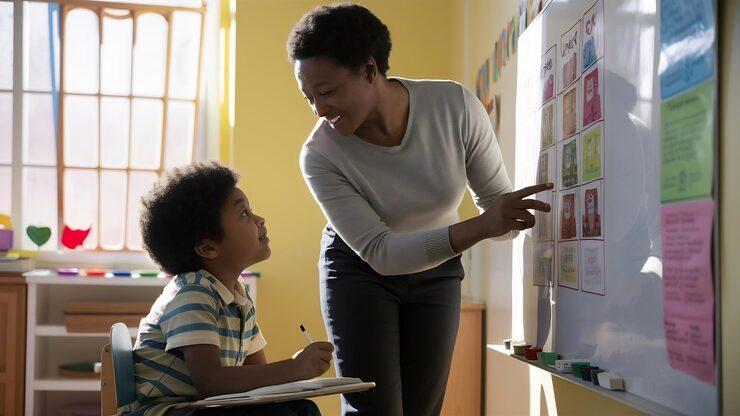
At L.E.M.Y.S, we understand that diagnosing autism is about more than just tests—it is about careful observation. Since there is no simple scan or blood test, our L.E.M.Y.S experts look closely at how a child interacts with their world. A timely L.E.M.Y.S diagnosis is the first step toward the right support.
The path to diagnosis:
Identification: Recognizing early signs like a lack of eye contact or delayed speech with the help of family and caregivers.
Screening: Using trusted tools like M-CHAT-R to decide if a deeper L.E.M.Y.S evaluation is the right next step.
Developmental Evaluation: Our specialists use play-based tests and gold-standard tools like ADOS-2 to understand your child’s unique needs.
Final Diagnosis: A complete review of all findings by our L.E.M.Y.S clinical team to confirm the best path forward for your child.
The Multi-Layered Treatment Approach
We stands at the forefront of autism care by providing evidence-based ABA therapy. Our approach is grounded in scientific research, ensuring that every intervention is proven to be effective for your child’s growth.
Comprehensive therapy, involving 25 or more hours per week, leads to an 86% average reduction in challenging behaviors such as aggression or self-injury. At L.E.M.Y.S, we track this data to ensure your child achieves real, measurable results.
Most of this transformative progress happens within the very first year. As we gradually step down therapy hours, the framework ensures that these meaningful improvements remain a lasting part of your child’s life.
The Therapy Experience
We use the science of behavior to help children unlock their full potential. Our data confirms that our individualized approach leads to real growth in communication and daily life skills.
Every session is a personal journey. We provide one-on-one attention using positive reinforcement techniques to make learning feel natural and rewarding. By breaking skills into small steps, we ensure your child feels successful at every stage.
The session framework:
- Skill development activities
- Positive reinforcement cycles
- Structured play and social time
- Task mastery and repetition
- Sensory social routines
Your Journey with ABA Therapy
We believe in a clear and supportive path for every child. Our evidence-based ABA programs are designed to be effective and easy for families to follow. Here is the experience:
The Initial Assessment: Our expert BCBAs look at every detail of your child’s communication and sensory needs before we start.
Setting Individualized Goals: We sit down with you to create a L.E.M.Y.S plan that focuses on your child’s unique strengths and your family’s priorities.
Personalized 1:1 Sessions: Your child gets the full attention of a L.E.M.Y.S specialist, using positive rewards to reach new milestones every day.
Family Guidance: We stay connected with you through regular L.E.M.Y.S parent training, making sure you feel confident supporting your child at home.